


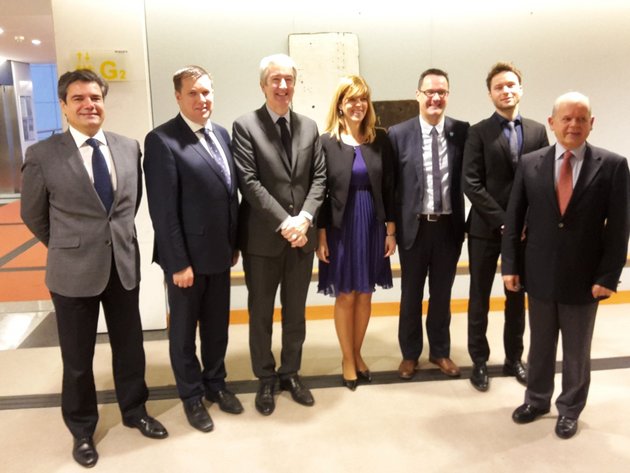
Brussels, 31 January 2017 – While the European hospitality industry is already a small food waster, HOTREC, the umbrella association of Hotels, Restaurants and Cafés in Europe, unveiled today a set of initiatives aimed at reducing even further the waste flow coming from its 1.8 million enterprises in a European Parliament event hosted by MEP Biljana Borzan.
Today 1/3 of the food produced every year is thrown away, while 1/4 of it would be enough to feed the world population, making the reduction of food waste an absolute priority to fight hunger and poverty. The food service sector generates only 12% of the overall food waste in Europe, of which the hospitality industry represents only a share, as the food service sector also includes party catering and contract catering*. In spite of this very positive track record, HOTREC developed a set of guidelines to help hospitality businesses in Europe reduce even further their food waste, together with joint recommendations with the European Federation of Food Banks (FEBA) to manage donations.
“The EU, as one of the most prosperous communities in the world, has a moral and political obligation to reduce huge quantities of food wasted every year. Therefore, I commend HOTREC and its members for their efforts in reducing food waste and conserving resources” commented MEP Biljana Borzan during the event.
Several success-stories on food waste reduction were also presented by HOTREC Members, showing that hospitality businesses are at the forefront of the fight against food waste.
“Although a small food waster, the industry takes its commitment to sustainability a step further with these guidelines, made of 8 essential pillars in business management to reduce even further food waste. We are also thankful to the FEBA which will support us to further develop, when possible, food donations” stressed Mr. Christian de Barrin, CEO of HOTREC.
“Building cooperations and sustainable partnerships with the various constituents of the communities we live in is at the heart of our dual mission of alleviating food poverty and combating food waste. The recommendations on food donations elaborated by HOTREC and FEBA are a striking example of how the hospitality sector and food banks can tackle food waste while delivering real benefits to the most vulnerable people in our societies” further added Mr. Patrick Alix, Secretary General of FEBA.
These initiatives are to be seen in the wider context of the U.N sustainable development goal of halving food waste and of the 2017 U.N International Year of Sustainable Tourism for Development. To access the full HOTREC guidelines and the best-practices presented at the event, please click here.
|
HOTREC represents the hotel, restaurant and café industry at European level. This industry includes around 1,8 million businesses, of which 99% are small and medium sized enterprises (91% of them micro enterprises, i.e. employing fewer than 10 people). These businesses make up some 59% of industry value added. The hospitality industry provides some 10.2 million jobs in the EU alone. Together with the other tourism industries, the sector is one of the largest industries in Europe. HOTREC brings together 43 national associations representing the sector in 29 different European countries. |
For further information: www.hotrec.eu
PRESS CONTACT: Alexis Waravka +32(0)2 504 78 43, alexis.waravka@hotrec.eu